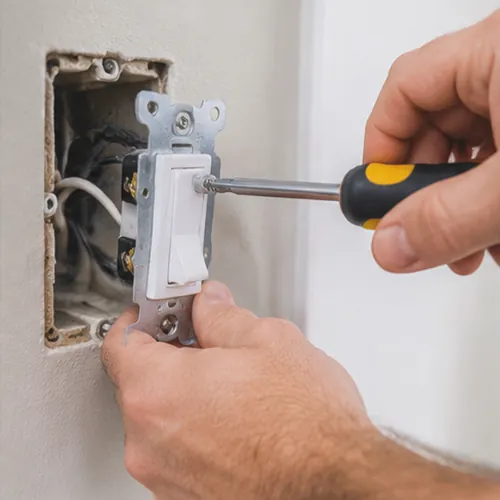
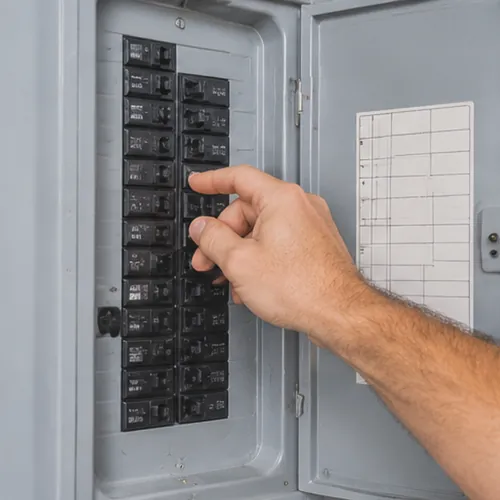
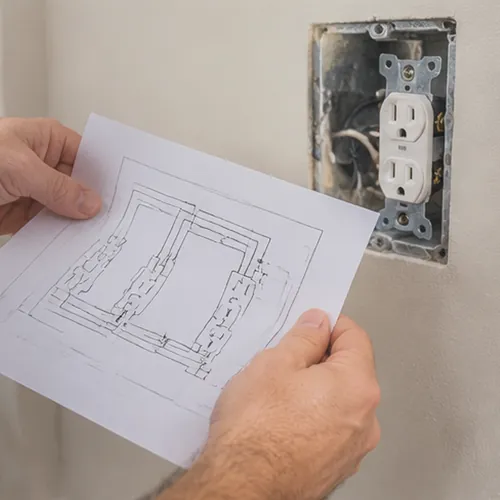
The step-by-step kit for outlets, switches, light fixtures and ceiling fans: 100+ wiring diagrams, the safety steps before you touch a wire, what to charge for each job and how to land your first ones. Even if you’ve never wired anything and the breaker panel makes you nervous.
“I paid a guy $160 to swap two outlets. He was in and out in thirty minutes.”
“My neighbor asked me to hang a fan. I said no because I didn’t know the wiring.”
Every week, somewhere on your street, an outlet goes dead, a fixture needs swapping or a new fan is sitting in a box. Most homeowners won’t touch it, and a service call for a small job often runs $100 or more. The jobs are simple once you know the wiring. The difference isn’t talent. It’s knowing the steps, so every job is safe and done right.
“I watched thirty videos and still didn’t know which wire went on the brass screw.”
A beginner with a new switch in his hand
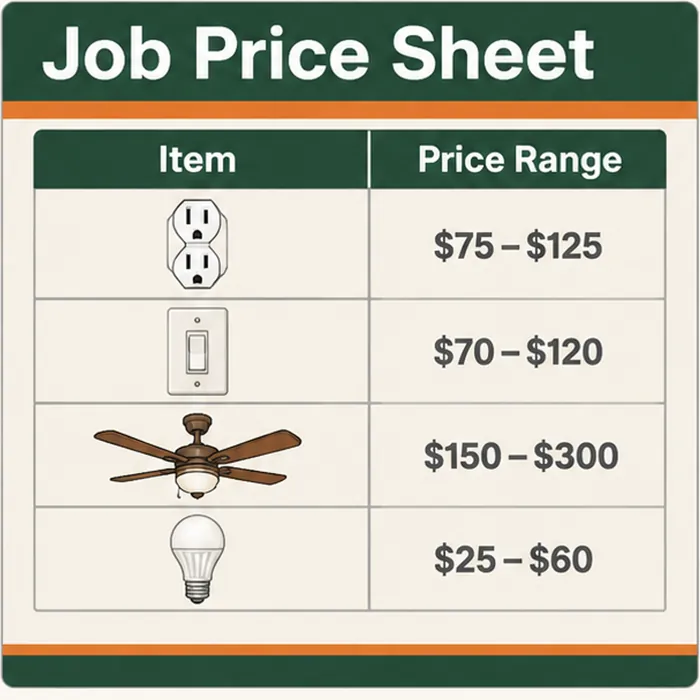
Example prices from public 2026 handyman and home service listings in the US. Prices depend on the area, the job and local rules.
None of this is a talent problem. It’s a diagram problem, and this kit hands you the diagrams ready.
Holiday lights, new fans before summer, fixtures for move-in season, the outlet that quit before the party. The guy who’s ready when the call comes is the one who gets the job.
Enough time to learn the basics, practice on a board in your garage and do your first job, before somebody asks “can you take a look?”
That’s how a dead outlet turns into a paid job, one box at a time.
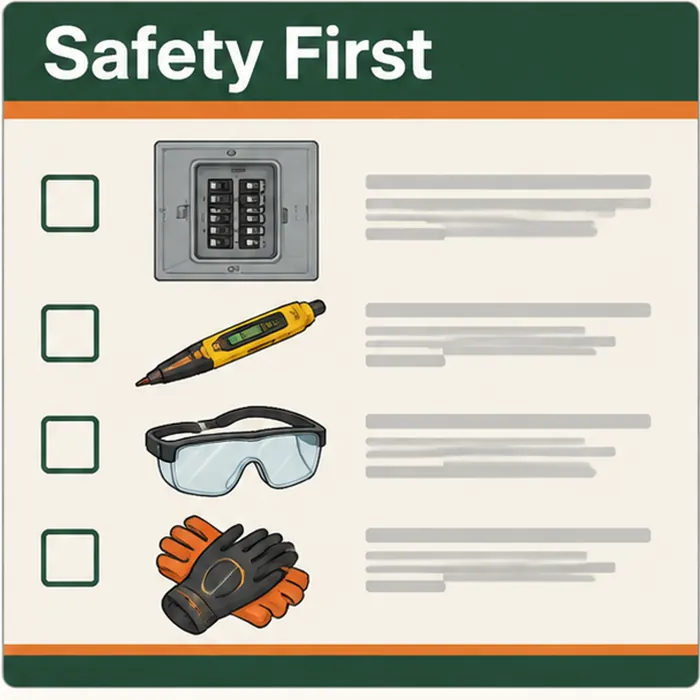
Find the right breaker, shut it off and confirm it’s dead with a tester, every single time. Safety first, before a screw turns.
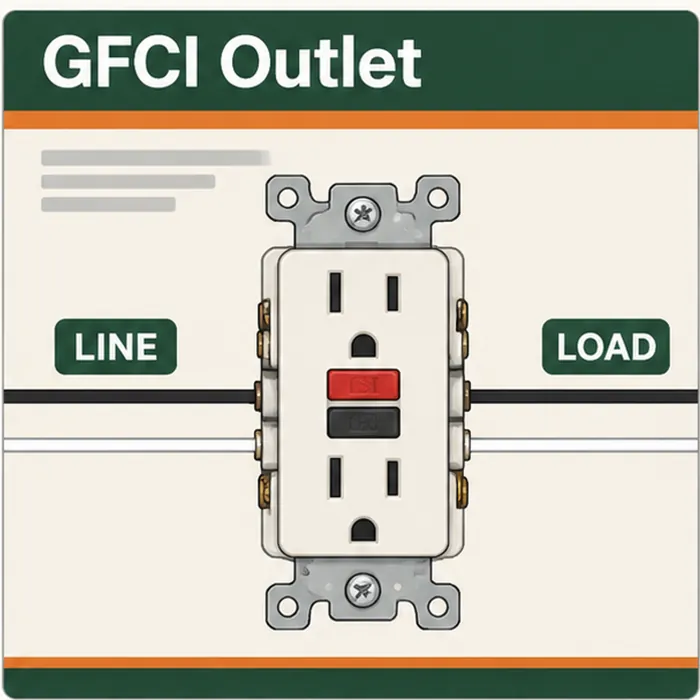
Find the diagram that matches what you see in the box: single-pole, 3-way, GFCI, dimmer, fan. Color by color, screw by screw.
Power back on, test it, clean up, and charge with the price sheet. Wire it, test it, bill it.
Each one has its diagram and steps inside, for your own house or for the people who ask you to take a look. These are the jobs that pay.
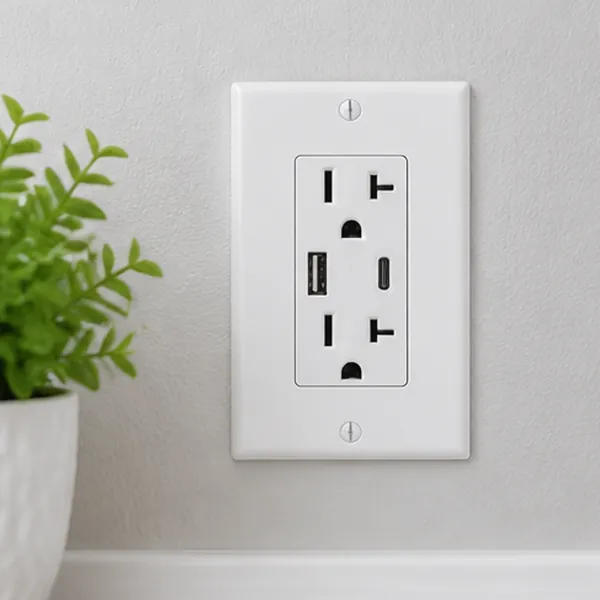
Outlet swaps & USB outletsOften $75–150 a job
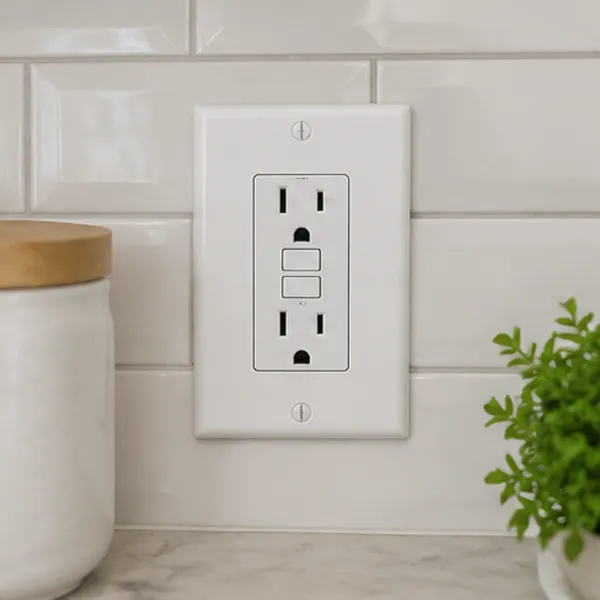
GFCI outletsOften $100–175 each

Ceiling fan installsOften $150–350 each

Light fixture swapsOften $100–200 each
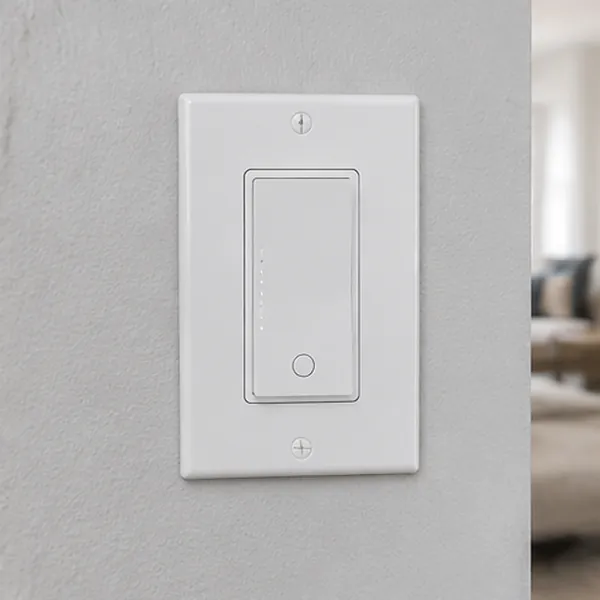
Dimmers & smart switchesOften $75–150 each

Video doorbellsOften $100–200 eachExample prices from public 2026 handyman listings. Not a promise of what you will charge or earn. Prices and what you are allowed to do for hire depend on your area and local rules.
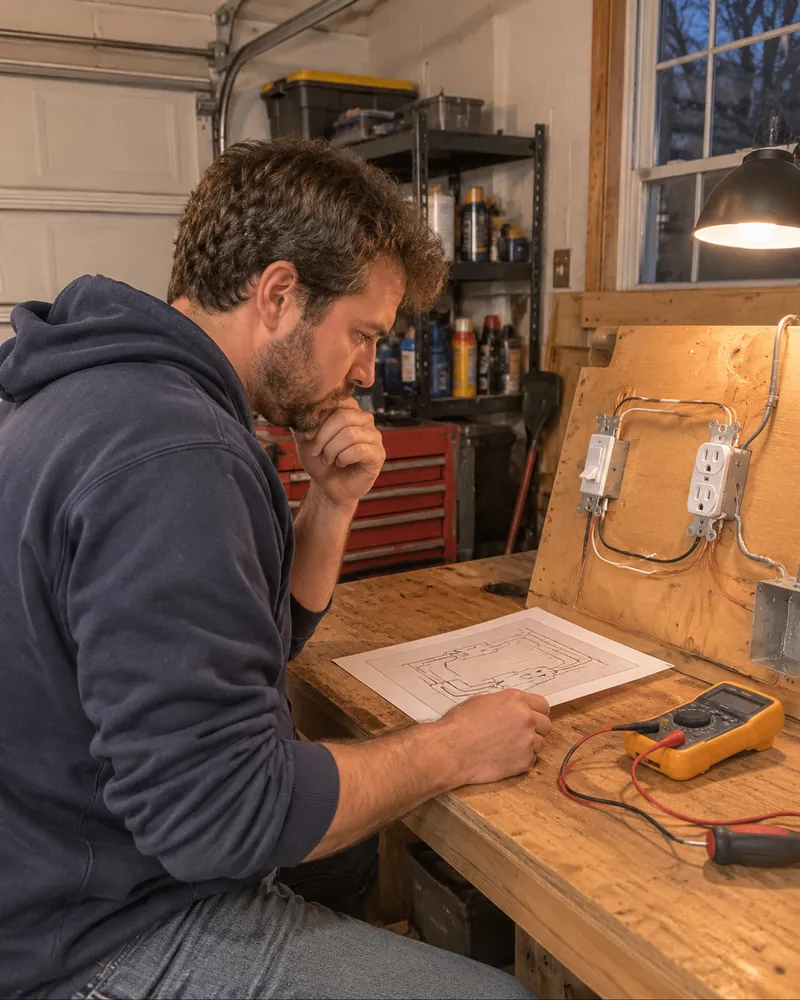
For your houseThe dead outlet, the old fixture, the switch that sparks. Fix them yourself, the safe way, and keep the service call money in your pocket.

For extra incomeNeighbors, family, the guys from work, older folks on your street. Start with one job from someone who already asked, and see where it goes.
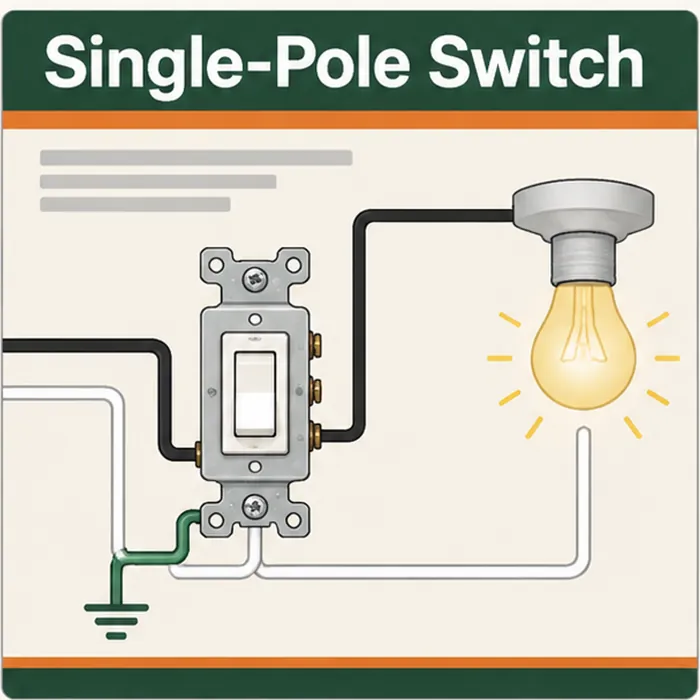
These are the kinds of pages inside: wiring diagrams, the GFCI walk-through, the job price sheet and the safety checklist. Every one is ready to use today.
Open the kit, run the safety routine and wire your first switch on a practice board. If it isn’t for you, send one email within 7 days and we’ll refund you in full. No forms, no hard feelings.
They were exactly where you are, sure electrical was “not their thing”.
Mike ›
Darnell ›
Carol ›
Open Kit 1, learn hot, neutral and ground, and check the tool list. Run the safety routine on your own panel, so you know which breaker kills what.
Screw a switch, an outlet and a bulb to a piece of plywood and wire them from the diagrams in Kit 2. Then swap one in your own house and test it.
Swap a light fixture with Kit 4, then open the price sheet in Kit 6 and write down what you’d charge. Your first job is allowed to take longer than the tenth.
Open the First Jobs Playbook: what to post, where to post it and the message for the people who already asked. Then take your first job.
That’s it. One week, a few jobs you can do with your eyes open, and “sure, I’ll take a look” doesn’t scare you anymore.
From the first time you open a switch box to your first paid job, and a little extra money on the side.
What every wire does, the tools you need and the routine you run before every job. Off, tested, then touched.

Color-coded diagrams for the setups you’ll actually find in American homes, so you match the box and wire it right.

Step-by-step installs for the jobs people call about most, with the mistakes that make a job come back. Box to switch, done right.

The most common problems, how to find the cause and how to fix the simple ones. And the clear line where you stop and call a licensed pro.

What to charge for each small job, how to quote it and what to say to the people who ask, so “can you take a look?” turns into a paid job.

The tool list, troubleshooting flowcharts, quote and invoice templates, a code and permit checklist and how to turn one job into a regular customer.

What they say once the first switch works.
“Two outlets in my kitchen were dead and the quote was $180. I ran the safety routine, found the loose backstab on the GFCI with the troubleshooting guide and rewired it to the screws like the diagram shows. Twenty minutes, both outlets back, and I kept the $180.”
“I always told people I’m not an electrical guy. I built the practice board in my garage, wired a 3-way off the diagram on a Sunday, then swapped the hallway switches at home. Last month I hung two ceiling fans for a neighbor and he paid me $250.”
“I’ve fixed engines my whole life but wires scared me. The kit starts with what hot, neutral and ground actually do, and the tester routine every time. Now I do light fixtures and dimmers for the older folks at church, and I quote them off the price sheet.”
“My clients kept asking if I could swap their porch lights. I learned the fixture and motion sensor installs, checked the city rules with the permit checklist, and now I add a light or two to a yard job. Three this month.”
No. The kit starts from zero: what each wire does, the tools you need and the safety routine. Then you practice on a board before you touch a wall.
Electricity can hurt you. That’s why Kit 1 comes first: turn off the breaker, test that it’s dead with a tester, and only then touch anything. The kit covers small, common residential jobs and tells you clearly what to leave to a licensed electrician, like panel upgrades, new circuits and service work.
No. This is a practical guide, not a license or a certification. Rules for electrical work change by state and city, and many jobs need a licensed electrician or a permit. The Code & Permit Checklist helps you check what applies where you live before you take a paid job.
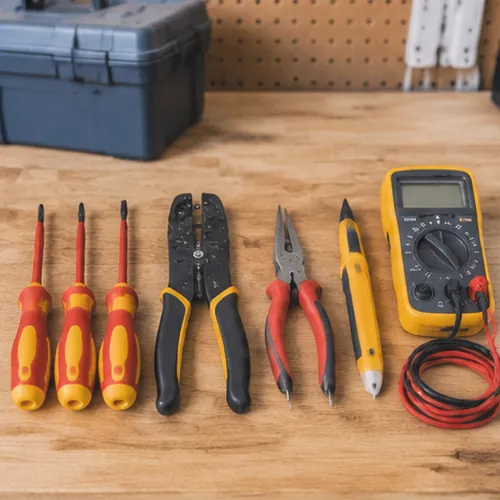
Basic ones: insulated screwdrivers, wire strippers, pliers, a non-contact voltage tester and a simple multimeter. The Tool Shopping List shows what to buy first and what can wait.
Outlets, GFCI and USB outlets, switches, 3-way and 4-way switches, dimmers, light fixtures, pendants, recessed lights, ceiling fans, motion sensors and common troubleshooting: 100+ diagrams in all.
We can’t promise any amount. It depends on your area, your hours, your prices and the rules where you live. The prices on this page are examples of what these jobs often bill for, not promises.
Printable PDF guides and color diagrams you can open on your phone at the job, plus quote and invoice templates. Nothing is shipped.
Right after you pay, you get an email to open your library. Everything is there, ready to open, print and use.
For life. Pull up any diagram whenever a new job comes in.
Yes. Checkout is secure, access arrives by email the moment you pay, and you’re covered for 7 days.
Your purchase is covered for 7 days. Open the kit, wire a switch or two, and if it isn’t for you, send us one email and we’ll refund you in full.